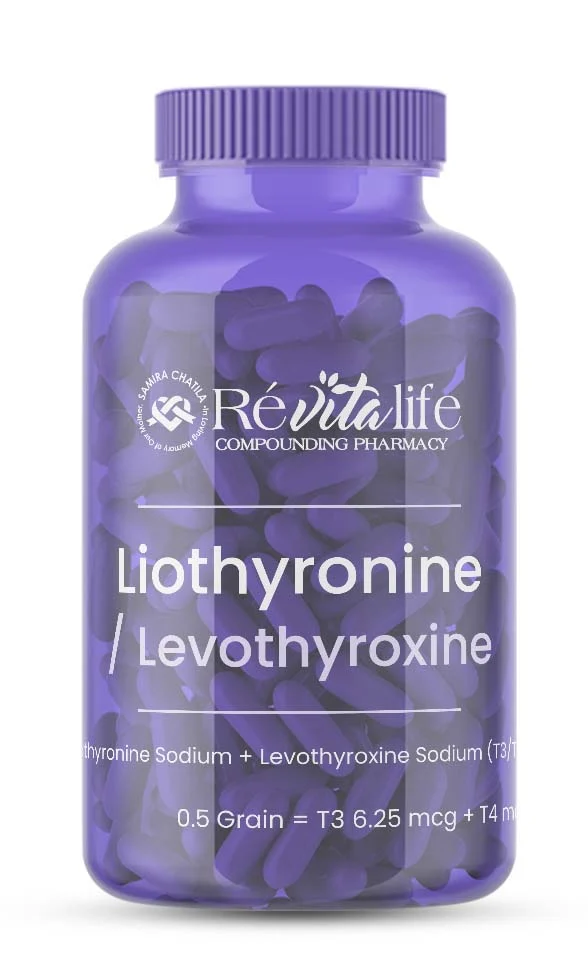
Product overview
Explore the preparation, dosage, clinical information, precautions, storage guidance and references held in this product record.
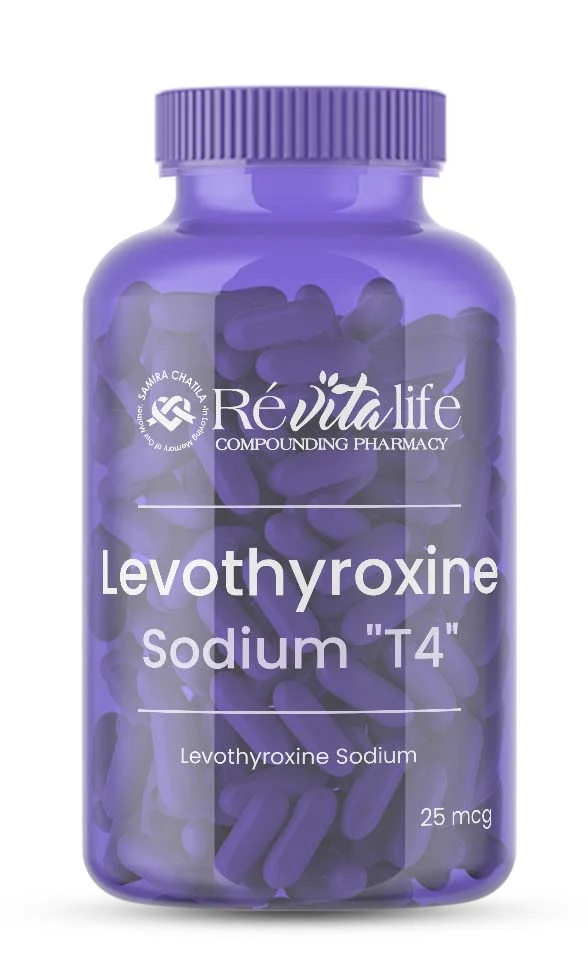
Hypothyroidism is one of the most common endocrine disorders, affecting millions of adults who require lifelong hormone replacement to restore euthyroidism and prevent multisystem complications. Synthetic levothyroxine sodium (T4) has been the standard of care for decades; however, a subset of patients continue to report fatigue, weight change, or mood and cognitive concerns despite biochemically adequate thyrotropin suppression. Interest has therefore grown in combination preparations that furnish both levothyroxine and the active metabolite liothyronine (T3) in ratios designed to mimic physiologic thyroid secretion. Liothyronine Sodium / Levothyroxine Sodium Capsules (Immediate Release) offer clinicians a precisely titratable oral option that delivers T3 and T4 simultaneously, aiming to smooth diurnal hormone profiles and reduce residual symptoms in appropriately selected adults. [1]
The two active ingredients are structurally identical to endogenous hormones but differ markedly in pharmacokinetics. Levothyroxine is converted peripherally to the more potent triiodothyronine, has a plasma half-life of roughly one week, and provides a stable hormonal reservoir. Liothyronine is absorbed rapidly, peaks within two hours, and possesses a half-life near one day, permitting brisk genomic and nongenomic actions. Administering both compounds together in a fixed capsule may better replicate normal thyroid physiology than monotherapy, particularly in patients lacking deiodinase activity or with absent thyroid tissue after surgery. [2]
Treatment is individualized based on lean body mass, cardiovascular status, and previous levothyroxine exposure. For naïve adults without cardiac disease, an initial daily capsule supplying approximately 1.6 mcg / kg of combined T4 equivalents (e.g., 13.5 mcg / 57 mcg for a 70 kg patient) is reasonable, followed by 12-week titration in 12.5 - 25 mcg T4-equivalent increments. Serum thyrotropin and free-T4 should be re-assessed every six weeks until stable. [14]
Patients converted from levothyroxine monotherapy may begin with a capsule that replaces 5 - 10 % of their prior T4 dose with liothyronine on a microgram-to-microgram basis. Because liothyronine has a higher molar potency, equivalence tables based on 3:1 to 4:1 T4:T3 ratios are recommended. Capsules are swallowed intact; dividing or crushing is discouraged to preserve uniform hormone distribution. [15]
Thyroid hormones cross cell membranes via specific transporters and bind nuclear thyroid hormone receptors α and β, which heterodimerize with retinoid-X receptors to regulate transcription of genes controlling basal metabolic rate, myocardial contractility, thermogenesis, and neurodevelopment. Levothyroxine serves primarily as a pro-hormone whose intracellular deiodination yields liothyronine, the ligand with higher receptor affinity. Providing exogenous T4 alone assumes intact deiodinase function; combination therapy directly supplies the active T3, potentially circumventing tissue-specific deficits in conversion. [4]
Liothyronine’s rapid onset also engages extranuclear pathways such as the PI3K-Akt and MAP-kinase cascades, producing vasodilatory and inotropic effects that contribute to improved cardiac output and mood elevation in some patients. Its shorter half-life, however, can generate supraphysiologic excursions if not carefully balanced with a sustained T4 background. The immediate-release capsule couples liothyronine with levothyroxine in a weight-based ratio that tempers these peaks while preserving prompt receptor occupancy. [5]
Emerging pharmacokinetic modeling and clinical trials demonstrate that individualized combination dosing anchored to residual thyroid output, sex, and body mass may normalize serum free-T3 to free-T4 ratios more consistently than T4 monotherapy. Simulation studies indicate that once-daily co-administration of the present capsule achieves circadian hormone profiles closer to endogenous patterns than split or staggered schedules, supporting its use as a convenient, single-dose regimen. [6]
Absolute contraindications include untreated thyrotoxicosis, uncorrected adrenal insufficiency, and acute myocardial infarction, where the thermogenic and chronotropic properties of T3 could worsen ischemia. Because liothyronine accelerates oxygen consumption and myocardial contractility, combination capsules should not be initiated in patients with uncontrolled arrhythmias, recent coronary revascularization, or severe congestive heart failure until cardiovascular status is optimized and beta-blockade considered. [7]
Relative contraindications encompass longstanding osteoporosis, fragile skeletal integrity, and malabsorption syndromes that impair predictable hormone uptake. Clinicians should exercise caution in elderly individuals or those with angina, adjusting the liothyronine component gradually to avoid provoking tachyarrhythmias. Dose escalation must be deferred in settings of acute infection, trauma, or pituitary insufficiency, where altered cortisol dynamics can mask impending adrenal crisis. [8]
Liothyronine augments the metabolic clearance of vitamin K-dependent clotting factors, potentiating oral anticoagulants such as warfarin. Initiation or dose changes mandate closer International Normalized Ratio monitoring and, when necessary, a proportional reduction in warfarin dosage to maintain therapeutic range. [9]
Gastrointestinal absorption of levothyroxine is compromised by concurrent ingestion of coffee, fiber-rich meals, soy flour, or calcium-fortified juices. Patients should take the capsule with plain water at least 30 minutes before breakfast or any interfering beverage. Cations in antacids, iron, and calcium supplements form insoluble complexes with thyroxine, necessitating a four-hour separation to sustain bioavailability. [10]
Adverse reactions mirror hyperthyroid physiology and are dose-dependent. Palpitations, heat intolerance, nervousness, and insomnia may emerge when serum free T3 exceeds upper reference limits. Meta-analysis of randomized trials found that thyroid hormone therapy did not significantly improve quality of life in subclinical hypothyroidism and cautioned against overtreatment, underscoring the need for symptom-guided titration. [11]
Bone turnover accelerates under chronic supratherapeutic dosing, particularly in postmenopausal women. Recent longitudinal data associate high-normal thyroxine replacement with reduced bone mineral density at the femoral neck and lumbar spine, suggesting periodic dual-energy X-ray absorptiometry for at-risk cohorts. [12]
Adequate maternal thyroxine is vital for fetal neurodevelopment, and levothyroxine requirements often rise by 30 - 50 % during gestation due to increased thyroxine-binding globulin.
Although liothyronine crosses the placenta less efficiently and is not routinely escalated, fixed-dose combination therapy can be continued with close monitoring.
Prospective analysis indicates that maintaining maternal thyrotropin below trimester-specific targets using adjusted T4/T3 ratios correlates with lower rates of pre-eclampsia, preterm delivery, and impaired cognitive performance in offspring. [13]
Levothyroxine undergoes hydrolytic and photochemical degradation, whereas liothyronine is relatively stable. Store capsules tightly closed at 20 - 25 °C (68 - 77 °F). Protect from light and humidity; do not repackage in weekly pill organizers lacking desiccant, as potency loss exceeding 5 % has been observed within 60 days under ambient humidity. [16]
- Link Opens in New Tab](https://doi.org/10.1172/JCI60047)
- Link Opens in New Tab](https://doi.org/10.1093/ejendo/lvad172)
- Link Opens in New Tab](https://doi.org/10.3389/fendo.2019.00746)
- Link Opens in New Tab](https://doi.org/10.1210/endrev/bnac009)
- Link Opens in New Tab](https://www.medicine.com/drug/liothyronine/hcp)
- Link Opens in New Tab](https://doi.org/10.1186/s12902-023-01434-y)
- Link Opens in New Tab](https://www.endocrine.org/clinical-practice-guidelines)
- Link Opens in New Tab](https://doi.org/10.3389/fendo.2022.843539)
- Link Opens in New Tab](https://hellopharmacist.com/drug-interactions/drugs/liothyronine/liothyronine-with-warfarin)
- Link Opens in New Tab](https://www.verywellhealth.com/coffee-and-thyroid-medication-3233255)
- Link Opens in New Tab](https://doi.org/10.1001/jama.2018.14260)
- Link Opens in New Tab](https://doi.org/10.1186/s12902-024-01819-7)
- Link Opens in New Tab](https://doi.org/10.1089/thy.2023.0546)
- Link Opens in New Tab](https://gpnotebook.com/pages/diabetes-and-endocrinology/pharmacokinetics-of-thyroid-hormones-t3-and-t4)
- Link Opens in New Tab](https://doi.org/10.1007/978-3-030-63277-9_2)
- Link Opens in New Tab](https://doi.org/10.1186/s41120-022-00062-5)
- Link Opens in New Tab](https://doi.org/10.3390/ph14030206)
- Link Opens in New Tab](https://doi.org/10.1002/cpdd.608)
- Link Opens in New Tab](https://doi.org/10.1089/thy.2022.0196)
- Link Opens in New Tab](https://www.thyroid.org/professionals/ata-professional-guidelines/)
- Link Opens in New Tab](https://doi.org/10.1001/jama.283.21.2822)
- Link Opens in New Tab](https://www.hanstenandhorn.com/hh-article-January-2016.pdf)
- Link Opens in New Tab](https://www.reuters.com/business/healthcare-pharmaceuticals/health-rounds-widely-used-thyroid-pill-may-be-linked-bone-loss-2024-11-27/)
- Link Opens in New Tab](https://www.endocrinology.org/endocrinologist/144-summer-22/features/the-latest-guidance-in-managing-thyroid-disease/)
- Link Opens in New Tab](https://doi.org/10.1201/9781003339823-15)
- Link Opens in New Tab](https://europepmc.org/article/PMC/3092723)
This compounded medication is prepared under section 503A of the U.S. Federal Food, Drug, and Cosmetic Act. Safety and efficacy for this formulation have not been evaluated by the FDA. Therapy should be initiated and monitored only by qualified healthcare professionals.
Product gallery
Professional guidance
Compounded preparations are supplied only when clinically appropriate and supported by a valid prescription. Product information is educational and does not replace advice from a licensed healthcare professional.
Upload prescriptionQuestions and answers
Swallow it on an empty stomach with water, then wait at least 30 minutes before eating or drinking beverages such as coffee that can impair hormone absorption. [17]
Serum T3 rises within hours, but clinical benefits typically evolve over 4 - 6 weeks as tissue receptors equilibrate and thyrotropin normalizes; bioavailability studies show steady-state is achieved by two weeks. [18]
No. Thyroid hormones should never be prescribed solely for weight reduction; doing so risks serious cardiac and skeletal adverse effects. [19]
Thyrotropin and free T4 every 6 - 8 weeks until a stable target is reached, with periodic free T3 and lipid panels thereafter, in accordance with American Thyroid Association guidance. [20]
Yes, but separate them from your capsule by at least four hours because calcium carbonate can bind thyroxine and blunt absorption. [21]
Yes-cholestyramine, sucralfate, proton-pump inhibitors, and certain estrogen formulations can reduce bioavailability or alter protein binding; your pharmacist should review your full medication list. [22]
Maintaining thyrotropin within reference limits minimizes risk, yet observational data link high-normal dosing to bone loss in older adults, so dual-energy X-ray absorptiometry is advisable every two years. [23]
Specialist societies note that while levothyroxine monotherapy suffices for most, a carefully supervised T4/T3 trial may benefit symptomatic patients after shared decision-making. [24]
Liothyronine reaches maximal plasma concentration about two hours post-dose and has an elimination half-life near 19 hours, supporting once-daily administration. [25]
Yes, but even minor manufacturing differences can alter absorption; recheck thyrotropin six weeks after any change and adjust dosing as needed. [26]