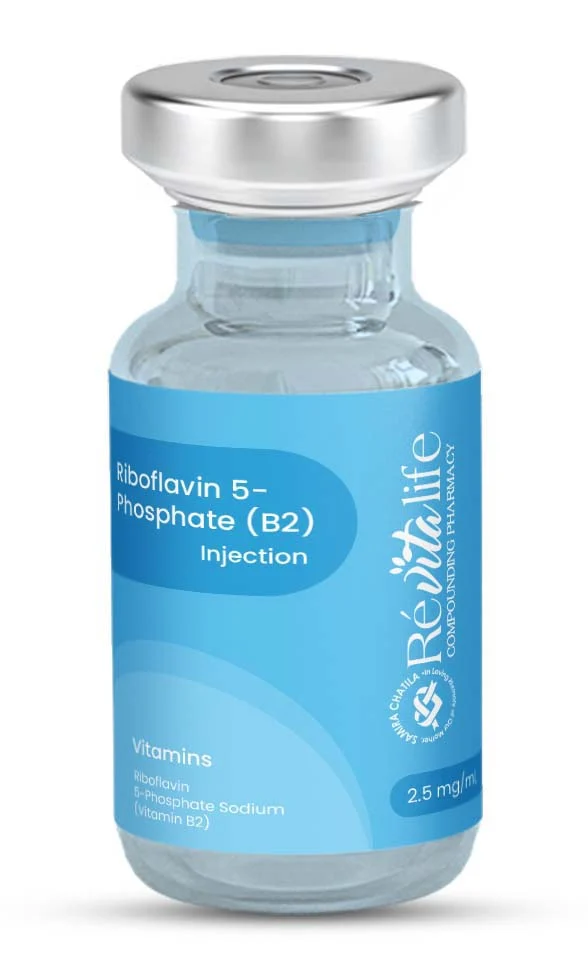
Riboflavin 5 Phosphate Sodium (VIT B2) Injection

Riboflavin 5-Phosphate Sodium (Vitamin B2)2.5 mg/mL

Generic name: Riboflavin-5-Phosphate Sodium Synonyms: Flavin mononucleotide (FMN), Riboflavin sodium phosphate Drug class: Water-soluble vitamin; precursor to flavoprotein coenzymes Formulation: Sterile injectable solution for IV use Typical concentration: 1–10 mg/mL depending on manufacturer Appearance: Clear yellow to orange solution; strongly fluorescent Clinical uses include: Nutritional supplementation in deficiency states (malabsorption, alcoholism, prolonged…

Prescription-led preparation
Availability and formulation are confirmed by the pharmacy after professional review.

ABOUT THIS PREPARATION

A considered approach to personalized care

01Personalized preparationPrepared around the prescription and patient need.
02Pharmacy-led careProfessional guidance from the RevitaLife team.
03Made with care in DubaiA considered compounding experience from enquiry onward.

Product overview

Everything you need to know

Explore the preparation, dosage, clinical information, precautions, storage guidance and references held in this product record.

01About Riboflavin 5 Phosphate Sodium (VIT B2) Injection

Generic name: Riboflavin-5-Phosphate Sodium
Synonyms: Flavin mononucleotide (FMN), Riboflavin sodium phosphate
Drug class: Water-soluble vitamin; precursor to flavoprotein coenzymes
Formulation: Sterile injectable solution for IV use
Typical concentration: 1–10 mg/mL depending on manufacturer
Appearance: Clear yellow to orange solution; strongly fluorescent

Clinical uses include:

  • Nutritional supplementation in deficiency states (malabsorption, alcoholism, prolonged TPN)
  • Supportive therapy in mitochondrial disorders
  • Adjunctive therapy in migraines (IV preparation sometimes used in infusion therapy programs)
  • Part of multivitamin IV infusion formulas ("IV drips")
  • Situations requiring rapid replacement of riboflavin stores

Pharmacology summary:
Riboflavin-5-phosphate is the phosphorylated, active form of riboflavin and a direct precursor to FMN and FAD, essential coenzymes in oxidative metabolism, energy production, and antioxidant pathways.

02Dosage

(Doses may vary based on institutional protocols; adjust according to patient condition.)

General supplementation:

  • 5–50 mg IV as part of an IV multivitamin or infusion mixture.
  • Administer diluted in compatible IV fluids (e.g., NS or D5W).
  • Infuse over 30–60 minutes to minimize irritation.

Riboflavin deficiency:

  • 10–25 mg IV daily until clinical improvement, then switch to oral therapy.

Mitochondrial / metabolic support (off-label):

  • 25–100 mg IV, frequency varies per specialist recommendation.

Migraine therapy (off-label):

  • 50–100 mg IV as part of an infusion protocol (often combined with magnesium and other vitamins).

Note: Riboflavin is generally very safe, but IV administration should be performed under clinical supervision.

03Mechanisms of Action

Riboflavin-5-phosphate (FMN) is a biologically active form of vitamin B2 and precursor to flavin adenine dinucleotide (FAD).
Both FMN and FAD act as essential coenzymes in:

A. Cellular Energy Production

  • FMN and FAD participate in oxidation-reduction (redox) reactions in:
    • Electron transport chain (Complex I & II)
    • Krebs cycle
    • β-oxidation of fatty acids
  • Supports ATP generation and mitochondrial function.

B. Antioxidant Activity

  • Coenzyme for glutathione reductase, essential for maintaining reduced glutathione (GSH).
  • Supports detoxification and oxidative stress management.

C. Amino Acid & Drug Metabolism

  • Cofactor in metabolism of:
    • Tryptophan
    • Pyridoxine (Vitamin B6 activation)
    • Niacin synthesis
    • Various xenobiotics (cytochrome P450 function)

D. Maintenance of Healthy Skin, Eyes, and Mucous Membranes

  • Supports epithelial cell turnover
  • Promotes normal vision and prevents corneal vascularization

E. Hematologic Function

  • Important for normal erythropoiesis

Deficiency can contribute to anemia

04Contraindications & Precautions

Absolute Contraindications:

  • Known hypersensitivity to riboflavin or any component of the formulation.

Relative Precautions:

  • Renal impairment: Riboflavin is renally excreted; accumulation is not dangerous but may cause more intense yellow urine.
  • History of photosensitivity disorders: Riboflavin can increase photosensitivity; advise avoidance of excessive UV exposure.
  • Gallbladder disease: High doses rarely increase bilirubin mildly; caution in severe liver dysfunction.
  • IV site irritation: Highly colored solution may cause local irritation or staining of tissues in case of extravasation.

Special Monitoring:

  • Infusion site for irritation
  • Allergic reactions (rare)
  • Avoid exposure of solution to strong light (vitamin is light-sensitive)
05Interactions

Drug Interactions:

  • Anticholinergic drugs: May delay gastric emptying, but relevant only to oral administration.
  • Probenecid: Can reduce riboflavin renal clearance.
  • Photosensitizing drugs (e.g., tetracyclines, thiazides): Riboflavin may enhance photosensitivity.
  • Chlorpromazine, TCAs, some anticonvulsants: Chronic use may reduce riboflavin levels.

Lab Interactions:

  • High-dose riboflavin can cause false elevation or interference in:
    • Urine colorimetric tests
    • Some fluorometric assays (due to natural fluorescence)

Food interactions: Not applicable to IV administration.

06Adverse Reactions / Side Effects

Riboflavin is generally very safe; adverse effects are usually mild.

Common:

  • Bright yellow urine (harmless)
  • Mild warmth or flushing during infusion
  • Mild local irritation at IV site

Less Common:

  • Headache
  • Dizziness
  • Nausea (usually if given too rapidly)
  • Hypersensitivity reactions (rare)

Rare but serious:

  • Anaphylactoid reaction (extremely rare)
  • Extravasation can cause local tissue staining and irritation
07Pregnancy & Breastfeeding

Pregnancy:

  • Riboflavin is Category A equivalent (safe in pregnancy).
  • Required for fetal development; deficiency can cause maternal anemia and fetal growth impairment.
  • IV supplementation acceptable if clinically indicated.

Breastfeeding:

  • Riboflavin is excreted in breast milk, but safe and considered beneficial.
  • No known adverse effects in infants at therapeutic doses.
08Storage
  • Store at 20–25°C (68–77°F) unless otherwise specified by manufacturer.
  • Protect from light—riboflavin is highly photosensitive.
  • Do not freeze.
  • Use within recommended time after opening vial; discard unused portion according to sterile handling guidelines.
09References

(Standard medical/pharmaceutical references – no external links)

  1. Micromedex Drug Reference – Riboflavin and Riboflavin-5-Phosphate
  2. Lexicomp Online – Riboflavin Monograph
  3. British National Formulary (BNF) – Vitamin B2
  4. NIH Office of Dietary Supplements – Riboflavin Fact Sheet
  5. Remington: The Science and Practice of Pharmacy
  6. Goodman & Gilman’s: The Pharmacological Basis of Therapeutics
Related topics
compounding pharmacyinjectionIV Therapyprescription supportriboflavin 5 phosphate sodium injectionvitamin and nutrient support

Professional guidance

Start with the prescription, not the product.

Compounded preparations are supplied only when clinically appropriate and supported by a valid prescription. Product information is educational and does not replace advice from a licensed healthcare professional.

Upload prescription
EXPLORE MORE

Related preparations

Other RevitaLife preparations from the same category.