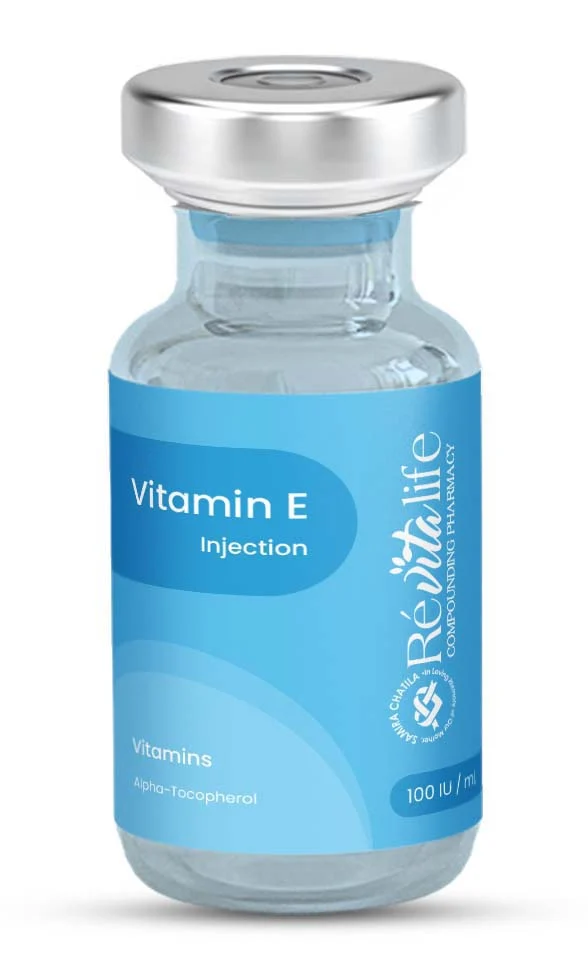
Vitamin E Injection

Alpha-Tocopherol100 IU / mL

Vitamin E refers to a group of fat-soluble compounds (tocopherols and tocotrienols). α-Tocopherol is the most biologically active form in humans. IV or parenteral vitamin E is provided mainly as: Alpha-tocopherol injectable solutions (often in mixed emulsions for TPN) Alpha-tocopheryl acetate, alpha-tocopheryl succinate (prodrug forms; hydrolyzed in vivo) Lipid-based emulsions designed for…

Prescription-led preparation
Availability and formulation are confirmed by the pharmacy after professional review.

ABOUT THIS PREPARATION

A considered approach to personalized care

01Personalized preparationPrepared around the prescription and patient need.
02Pharmacy-led careProfessional guidance from the RevitaLife team.
03Made with care in DubaiA considered compounding experience from enquiry onward.

Product overview

Everything you need to know

Explore the preparation, dosage, clinical information, precautions, storage guidance and references held in this product record.

01about Vitamin E Injection

Vitamin E refers to a group of fat-soluble compounds (tocopherols and tocotrienols). α-Tocopherol is the most biologically active form in humans.

IV or parenteral vitamin E is provided mainly as:

  • Alpha-tocopherol injectable solutions (often in mixed emulsions for TPN)
  • Alpha-tocopheryl acetate, alpha-tocopheryl succinate (prodrug forms; hydrolyzed in vivo)
  • Lipid-based emulsions designed for infusion

Primary Clinical Uses of IV Vitamin E:

  • Patients on total parenteral nutrition (TPN), especially premature infants
  • Severe fat-malabsorption syndromes (e.g., cholestatic liver disease, short bowel syndrome)
  • Severe vitamin E deficiency with neurologic manifestations
  • Situations in which oral/IM therapy is not feasible or not absorbed
02Dosage

Exact dosing must follow manufacturer guidelines and clinical judgment based on age, weight, and indication.

A. Adults (TPN or Deficiency)

  • 5–10 mg/day of α-tocopherol equivalents as part of multivitamin IV infusions
  • Some protocols allow up to 15 mg/day when deficiency is confirmed
  • Higher therapeutic doses (50–100 mg/day IV) have been used in severe deficiency, but require specialist oversight

B. Pediatrics

  • Preterm infants on TPN: 8–3.5 mg/kg/day
  • Term infants and children: 7–10 mg/day, adjusted individually

Important Notes

  • Vitamin E should never be administered as a bolus/injection directly into a vein; it must be diluted in a compatible infusion solution (usually lipid emulsions or TPN formulations).
  • Parenteral vitamin E is typically included as part of multivitamin formulations rather than given alone.
03Mechanisms of Action

A. Antioxidant Activity

  • Vitamin E is the primary lipid-soluble antioxidant in human cell membranes.
  • Protects phospholipid bilayers from oxidative damage by scavenging free radicals (reactive oxygen species).
  • Prevents lipid peroxidation and propagation of oxidative chain reactions.

B. Cellular and Molecular Actions

  • Stabilizes cellular membranes, especially in high-metabolic tissues: brain, liver, muscle, and retina.
  • Interacts with vitamin C, glutathione, and selenium to maintain redox balance.
  • Regulates gene expression related to inflammation, apoptosis, and cell signalling.

C. Hematologic Effects

  • Prevents hemolysis due to oxidative stress, especially in premature infants with deficient antioxidant capacity.

D. Neurologic Effects

  • Maintains integrity of neurons, particularly in the posterior columns and cerebellum.
  • Deficiency leads to neuropathy, ataxia, and impaired reflexes—key reason for therapeutic supplementation.

E. Immunologic Effects

  • Enhances cell-mediated and humoral immunity, especially in vitamin E–deficient states.


04Contraindications & Precautions

Absolute Contraindications

  • Known hypersensitivity to tocopherol or formulation components
  • Hypervitaminosis E (rare but possible)
  • Severe coagulation disorders with unexplained bleeding unless treated

Relative Contraindications / Use With Caution

  • Vitamin K deficiency, anticoagulation disorders
  • Concomitant anticoagulant therapy (e.g., warfarin) – vitamin E may increase bleeding risk
  • Active bleeding (GI, intracranial, or surgical)
  • History of hemorrhagic stroke – high-dose vitamin E may raise risk
  • Patients with hepatic impairment (affects lipid metabolism)
  • Renal failure, where accumulation of lipid-based carriers may occur
  • Preterm neonates – risk of sepsis or necrotizing enterocolitis if excessive or undiluted formulations are used
05Drug & Nutrient Interactions

A. Drug–Drug Interactions

  • Anticoagulants (warfarin, heparin): ↑ risk of bleeding due to vitamin E’s antiplatelet effects
  • Antiplatelet agents (aspirin, clopidogrel): additional bleeding risk
  • Chemotherapy (e.g., anthracyclines, alkylating agents): theoretical reduction in oxidative stress needed for anti-cancer activity; avoid high-dose supplementation unless approved by oncology
  • Cyclosporine: high doses may alter drug disposition
  • Iron supplements: large doses of both may affect absorption and increase oxidative reactions (mostly oral relevance)

B. Drug–Nutrient Interactions

  • Vitamin K antagonism → can worsen coagulopathy or affect INR
  • Works synergistically with vitamin C (which regenerates oxidized vitamin E)
  • Requires adequate lipid transport for tissue distribution
06Adverse Reactions / Side Effects

A. Common

  • Generally well tolerated at physiologic doses
  • Injection site irritation if not properly diluted
  • Mild gastrointestinal or systemic effects in TPN settings: nausea, fatigue

B. Moderate to Severe (Usually Dose-Related)

  • Bleeding tendency / coagulopathy
    • Inhibition of platelet aggregation
    • Potentiation of anticoagulants
  • Hyperlipidemia (from lipid emulsion used as carrier)
  • Sepsis risk in neonates when high IV doses used (related to lipid emulsions)

C. Rare

  • Allergic reactions
  • Fat overload syndrome if large lipid emulsions infused too rapidly
  • Hemorrhagic stroke association at very high oral doses (≥400 IU/day), relevance to IV dosing unclear but caution advised
07Pregnancy & Breastfeeding

Pregnancy

  • Vitamin E is essential for normal fetal development.
  • Parenteral vitamin E is not routinely needed during pregnancy unless the mother is on TPN or has severe malabsorption.
  • Excess supplementation may be associated with:
    • premature rupture of membranes (historical data, mixed evidence)
    • increased bleeding risk

Breastfeeding

  • Vitamin E is secreted into breast milk.
  • Parenteral supplementation at physiological doses is generally considered safe.
  • High or pharmacologic doses should be avoided unless medically justified.

General Guideline:
Supplement only to correct deficiency or meet nutritional needs in TPN—not for cosmetic or non-medical uses.

08Storage
  • Store at 20–25°C (68–77°F) unless otherwise specified.
  • Protect from light and air, as vitamin E oxidizes easily.
  • Do not freeze.
  • Ensure proper handling of lipid emulsions to avoid contamination.
  • Inspect for particulate matter or separation before use.
09References

(Authoritative pharmacologic and clinical references; no URLs included)

  1. Traber MG, Atkinson J. Vitamin E, antioxidant and nothing more. Free Radic Biol Med.
  2. Food and Nutrition Board, Institute of Medicine. Dietary Reference Intakes for Vitamin C, Vitamin E, Selenium, and Carotenoids.
  3. Merck Manual Professional Edition – Vitamin E deficiency and therapy.
  4. UpToDate – “Vitamin E: Drug information,” and “Vitamin E deficiency: Clinical manifestations.”
  5. ESPEN Guidelines on parenteral nutrition micronutrient supplementation.
  6. American Society for Parenteral and Enteral Nutrition (ASPEN) – Recommendations for micronutrient dosing in TPN.
  7. British National Formulary (BNF) – Vitamin E monograph.
  8. European Medicines Agency (EMA) – Product data for injectable vitamin preparations.


Related topics
compounding pharmacyinjectionIV Therapyprescription supportvitamin and nutrient supportvitamin e injection

Professional guidance

Start with the prescription, not the product.

Compounded preparations are supplied only when clinically appropriate and supported by a valid prescription. Product information is educational and does not replace advice from a licensed healthcare professional.

Upload prescription
EXPLORE MORE

Related preparations

Other RevitaLife preparations from the same category.