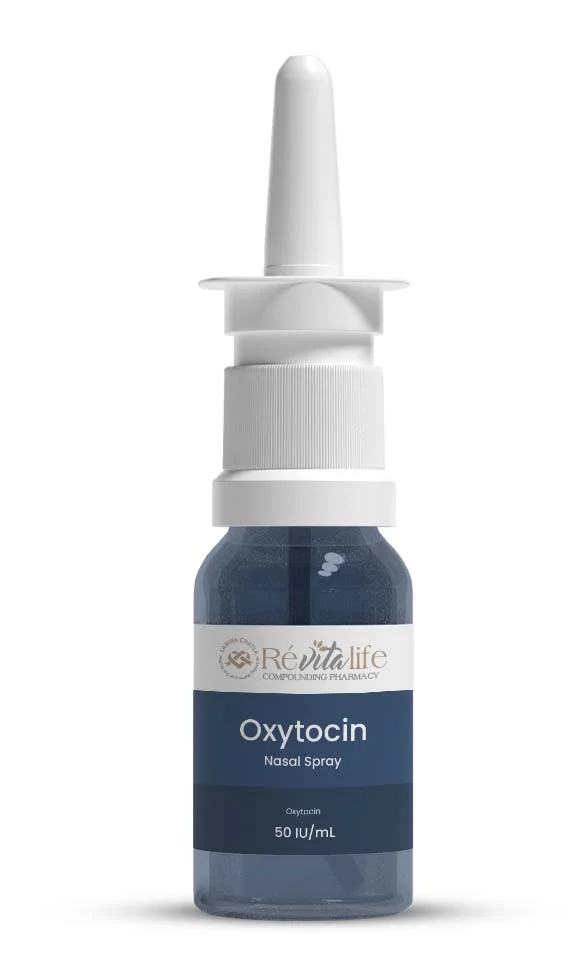
01Personalized preparationPrepared around the prescription and patient need.
02Pharmacy-led careProfessional guidance from the RevitaLife team.
03Made with care in DubaiA considered compounding experience from enquiry onward.
Related topics
compounding pharmacymen's healthnasal sprayoxytocin nasal sprayprescription supportsexual health
Professional guidance
Start with the prescription, not the product.
Compounded preparations are supplied only when clinically appropriate and supported by a valid prescription. Product information is educational and does not replace advice from a licensed healthcare professional.
Upload prescription →
Questions and answers
What you may want to know
How quickly will I notice effects on social anxiety?+
Many users report subtle reductions in social vigilance within 30-60 minutes of dosing, but robust improvements often emerge only after several weeks of adjunctive psychotherapy. [30]
Can I drive after using the spray?+
Mild dizziness has been reported; until individual response is known, avoid operating machinery for at least one hour post-dose. [32]
Does intranasal oxytocin cause dependency?+
No physical dependence has been documented; however, psychological reliance on perceived benefits is possible, so periodic drug holidays are advisable. [33]
Will it affect my blood pressure?+
Occasional transient hypotension or tachycardia occurs; monitor vital signs if you have cardiovascular disease. [34]
Is it compatible with SSRIs?+
No formal contraindication exists, but additive serotonergic effects are theoretically possible; dose adjustments may be required. [35]
Can I use it during pregnancy?+
Routine use is discouraged because uterine sensitivity increases near term, posing a minimal but real risk of contractions. [36]
Does it help with weight loss?+
Preliminary data suggest modest appetite suppression, but evidence is insufficient to recommend for obesity management alone. [37]
How should I store the bottle while traveling?+
Keep it in an insulated pouch with a cold pack and avoid direct sunlight; discard if exposed to temperatures above 25 °C for more than a day. [38]
What happens if I miss a dose?+
Skip the missed dose if the next scheduled administration is within six hours; doubling up increases systemic exposure unnecessarily. [39]
Can adolescents use oxytocin spray?+
Off-label pediatric use has been explored for autism, but safety and efficacy are not established; specialist supervision is essential. [40]