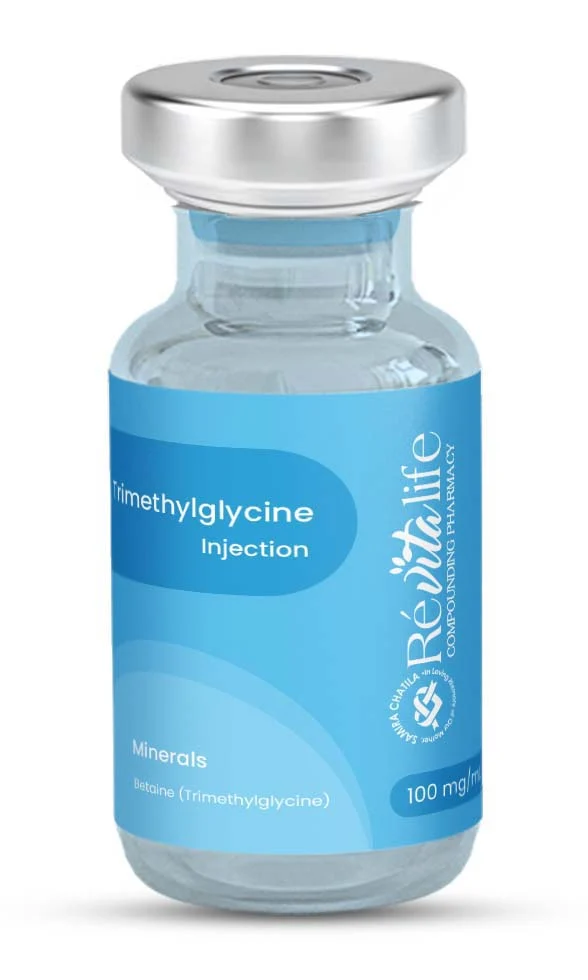
Trimethylglycine Injection

Betaine (Trimethylglycine)100 mg/mL

Generic Name: Trimethyl glycine (TMG) / Betaine Chemical Class: Methylated derivative of glycine; organic osmolyte; methyl-group donor. Physiological Role: Key Osmo protectant in cells Major participant in methylation reactions Converts homocysteine → methionine via betaine-homocysteine methyltransferase Supports detoxification, liver function, and cellular hydration Route of Administration: Primarily oral. IV use is non-standard…

Prescription-led preparation
Availability and formulation are confirmed by the pharmacy after professional review.

ABOUT THIS PREPARATION

A considered approach to personalized care

01Personalized preparationPrepared around the prescription and patient need.
02Pharmacy-led careProfessional guidance from the RevitaLife team.
03Made with care in DubaiA considered compounding experience from enquiry onward.

Product overview

Everything you need to know

Explore the preparation, dosage, clinical information, precautions, storage guidance and references held in this product record.

01About Trimethyl glycine Injection

Generic Name: Trimethyl glycine (TMG) / Betaine
Chemical Class: Methylated derivative of glycine; organic osmolyte; methyl-group donor.
Physiological Role:

  • Key Osmo protectant in cells
  • Major participant in methylation reactions
  • Converts homocysteine → methionine via betaine-homocysteine methyltransferase
  • Supports detoxification, liver function, and cellular hydration

Route of Administration:

  • Primarily oral.
  • IV use is non-standard and typically restricted to:
    • Research settings
    • Specialized metabolic disorders
    • Compounded preparations in metabolic crises (rare)

Clinical Uses (Oral Standard):

  • Treatment of homocystinuria (FDA-approved)
  • Supportive therapy for fatty liver and methylation deficits
  • Experimental uses in mitochondrial and metabolic disorders

Clinical Uses (IV — Experimental or Rare):

  • Severe metabolic crises where oral administration is impossible
  • Acute lowering of dangerously high homocysteine (non-routine)
  • Osmotherapy or hepatic metabolic support (investigational)
02Dosage

No standard or FDA-approved IV dosage exists.
The following information is extrapolated from pharmacology data and metabolic requirements.

A. Adult IV Dosage (Experimental/Literature-Supported)

  • 100–300 mg/kg/day IV, divided in continuous infusion
  • Typically dissolved in sterile solution and infused over 4–12 hours
  • Adjustments based on serum homocysteine and methylation markers

B. Oral-to-IV Conversion Considerations

Oral betaine doses for homocystinuria:

  • 6–12 g/day

IV dosing (if considered) attempts to mirror bioavailability, thus:

  • 6–10 g/day IV infusion would approximate therapeutic methylation support.

C. Administration

  • Must be compounded under sterile conditions
  • Infuse via peripheral or central IV line depending on osmolarity
  • Avoid bolus administration
  • Continuous monitoring required

MECHANISMS OF ACTION

A. Methyl Group Donor (Primary Mechanism)

Betaine → donates a methyl group →
Homocysteine → Methionine
(via betaine-homocysteine methyltransferase)

This leads to:

  • Reduction in plasma homocysteine
  • Increased methionine and S-adenosylmethionine (SAMe)
  • Improved methylation capacity for DNA, RNA, proteins, lipids, neurotransmitters

B. Osmoprotectant / Cellular Hydration

Betaine acts as a compatible osmolyte:

  • Protects cells during dehydration
  • Maintains cellular volume
  • Stabilizes proteins and enzymes
  • Protects mitochondria against osmotic and oxidative stress

C. Hepatic Function Support

  • Enhances fat metabolism
  • Supports phosphatidylcholine synthesis via methylation
  • Reduces hepatic steatosis (non-alcoholic fatty liver disease clinical use orally)

D. Glycine Derivative for Metabolic Pathways

Betaine indirectly contributes to:

  • Creatine synthesis
  • Carnitine synthesis
  • Detoxification pathways
  • Neurotransmitter formation

E. Impact on Mitochondrial Efficiency

Betaine improves:

  • Mitochondrial respiration
  • Oxidative stress resilience
  • ATP generation (indirectly via methylation pathways)
03Contraindications & Precautions

Absolute Contraindications

  1. Known hypersensitivity to betaine or components
  2. Severe renal impairment with risk of accumulation
  3. Hyper-methioninemia (>1000 µmol/L) – betaine increases methionine levels
  4. Homocystinuria with existing cerebral edema
    1. High methionine can worsen edema

Relative Contraindications

  • Severe hepatic impairment (risk of methionine accumulation)
  • Uncontrolled cardiovascular disease (rapid methylation shifts can alter lipid levels)
  • Psychiatric disorders (methylation changes influence neurotransmitters)
  • Pregnancy (high methylation burden may be harmful—use cautiously IV)

Monitoring

Mandatory when using IV betaine:

  • Serum homocysteine
  • Plasma methionine levels
  • Liver function tests
  • Renal function
  • Serum electrolytes
  • CNS monitoring (increased methionine → brain edema risk)

SAMe / SAH ratios if available

04Interactions

Drug Interactions

  1. Methionine supplementation → excessive methionine accumulation
  2. Serotonergic agents / antidepressants:
    1. Changes in methylation can alter neurotransmitter metabolism
  3. Valproic acid:
    1. Can increase homocysteine; betaine may counteract but must be monitored
  4. Folate and B12 therapy:
    1. Strong synergistic homocysteine-lowering effect
  5. Choline or phosphatidylcholine supplements:
    1. Additive methylation effects

Nutritional Interactions

  • Low folate/B12 levels reduce betaine efficacy
  • Excessive protein intake raises homocysteine burden
  • TMG interacts with osmotic balance, so electrolyte monitoring is crucial


05Adverse Reactions / Side Effects

Common

  • Gastrointestinal discomfort (less relevant IV)
  • Headache
  • Mild hypotension
  • Sweating or warmth during infusion
  • Body odor (“fishy smell”) from methylamine metabolites

Metabolic

  • Elevated methionine levels (most important risk)
  • Possible neurological symptoms if methionine >1000 µmol/L
  • Electrolyte disturbances (due to osmotic effects)
  • Altered lipid profiles

Serious

  • Cerebral edema (high methionine—rare but serious)
  • Seizures (secondary to metabolic imbalance)
  • Cardiac arrhythmias (electrolyte shifts)
  • Hepatic strain in chronic use

Overdose

  • Severe hypermethioninemia
  • CNS toxicity
  • Osmotic demyelination risk if infused too rapidly
06Pregnancy & Breastfeeding

Pregnancy

  • Oral betaine classification: Generally safe when necessary
  • IV use is not recommended, due to:
    • Lack of safety data
    • Potential methionine elevation
    • Unknown fetal methylation impacts

Use only if benefit outweighs risk in severe metabolic cases.

Breastfeeding

  • No evidence of harm at nutritional doses
  • Unknown transfer via IV administration

Monitor infant for irritability or feeding issues if maternal metabolic levels are high

07Storage

For compounded IV betaine solutions:

  • Temperature: 20–25°C (68–77°F)
  • Protect from moisture; hygroscopic compound
  • Store in airtight containers
  • Protect from light (recommended)
  • Use sterile technique for preparation
  • Shelf life depends on compounding pharmacy standards (typically < 7 days refrigerated)
  • Inspect for:
    • Precipitates
    • Cloudiness
    • Discoloration
    • Particulate matter

Do not use if solution integrity is compromised.

08References

(Professional clinical sources—no URLs)

  1. FDA Label: Betaine Anhydrous for Homocystinuria – Prescribing Information.
  2. S. Pharmacopeia (USP) – Monographs for Betaine.
  3. Mudd SH et al. Disorders of Transsulfuration and Methylation. Metabolic Textbook.
  4. Clinical Pharmacology of Betaine and Methyl Group Donors – Peer Review Articles.
  5. ASPEN: Guidelines for Specialized Nutrition Support in Metabolic Disorders.
  6. Medical Biochemistry: Methylation Cycle & Betaine-Homocysteine Methyltransferase.
  7. Hepatic Metabolism Texts – Role of Betaine in Fatty Liver and Methionine Pathways.
Related topics
compounding pharmacyinjectionIV Therapyprescription supporttrimethylglycine injectionvitamin and nutrient support

Professional guidance

Start with the prescription, not the product.

Compounded preparations are supplied only when clinically appropriate and supported by a valid prescription. Product information is educational and does not replace advice from a licensed healthcare professional.

Upload prescription
EXPLORE MORE

Related preparations

Other RevitaLife preparations from the same category.