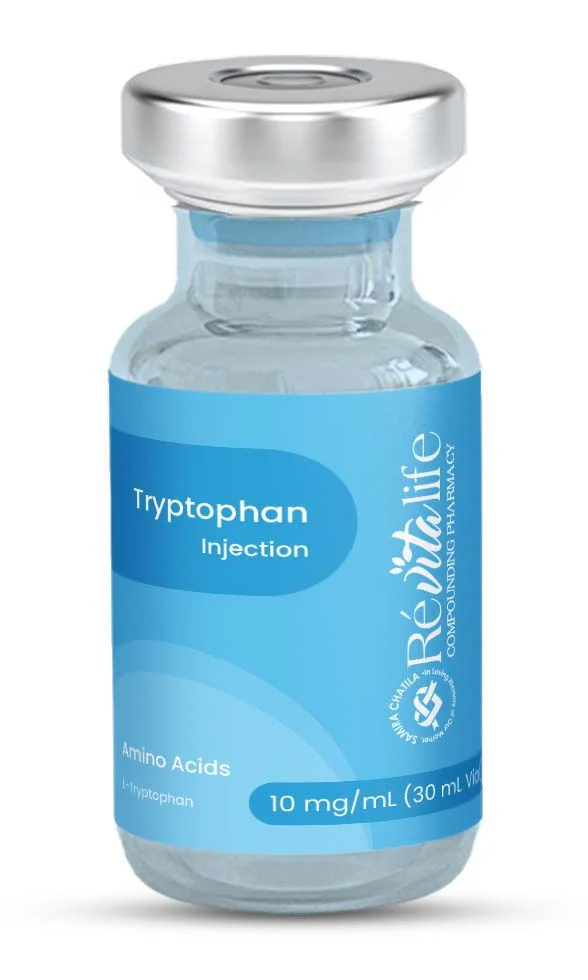
Tryptophan Injection

L-Tryptophan30 mg/mL (10 mL Vial)

Generic Name: L-Tryptophan (administered IV only as part of amino-acid solutions used for parenteral nutrition) Pharmacological Class: Essential aromatic amino acid; precursor to serotonin, melatonin, niacin, and kynurenine pathway metabolites. Clinical Use: Provided intravenously to prevent or treat tryptophan deficiency in patients unable to receive enteral nutrition, including: Critically ill patients requiring…

Prescription-led preparation
Availability and formulation are confirmed by the pharmacy after professional review.

ABOUT THIS PREPARATION

A considered approach to personalized care

01Personalized preparationPrepared around the prescription and patient need.
02Pharmacy-led careProfessional guidance from the RevitaLife team.
03Made with care in DubaiA considered compounding experience from enquiry onward.

Product overview

Everything you need to know

Explore the preparation, dosage, clinical information, precautions, storage guidance and references held in this product record.

01About Tryptophan Injection

Generic Name:

L-Tryptophan (administered IV only as part of amino-acid solutions used for parenteral nutrition)

Pharmacological Class:

Essential aromatic amino acid; precursor to serotonin, melatonin, niacin, and kynurenine pathway metabolites.

Clinical Use:

Provided intravenously to prevent or treat tryptophan deficiency in patients unable to receive enteral nutrition, including:

  • Critically ill patients requiring Total Parenteral Nutrition (TPN)
  • Major surgery, trauma, burns
  • Severe malabsorption
  • Prolonged NPO status
  • Short bowel syndrome

Rationale:

Tryptophan is required for:

  • Protein synthesis
  • Neurotransmitter synthesis (serotonin)
  • Immune function
  • Maintenance of nitrogen balance
  • Production of niacin via the kynurenine pathway
02Dosage

Important:

Tryptophan is not dosed individually as an IV injection. It is supplied only within balanced PN amino-acid solutions.
Therefore dosing is based on total amino acid requirement, not tryptophan alone.

Adult Parenteral Nutrition Requirements (General):

  • Typical PN amino-acid dose: 8–1.5 g/kg/day
  • Higher needs in burns, trauma, catabolic illness: up to 0–2.5 g/kg/day

Within standard PN solutions, tryptophan content is ~1–1.4% of total amino acids.

Approximate Delivered Tryptophan (from standard AA solutions):

  • 13–20 mg/kg/day (approximate; varies by manufacturer)

Method of Administration:

  • Administer only as part of continuous IV infusion via central or peripheral PN protocols.
  • Never administer IV tryptophan as a bolus or standalone infusion.

Individualized Dosing:

Requires consideration of:

  • Renal/hepatic function
  • Nitrogen balance goals
  • Metabolic rate and catabolism
  • Electrolyte status
  • Fluid restrictions

Precise dosing must be calculated by a licensed prescriber within a medically supervised nutrition-support program.

03Mechanisms of Action

Protein & Tissue Synthesis

  • Tryptophan is an essential amino acid incorporated into structural proteins, enzymes, and hormones.
  • Supports muscle protein synthesis, wound healing, and nitrogen balance.

Serotonin Synthesis

Tryptophan → 5-Hydroxytryptophan (5-HTP)Serotonin (5-HT)
Roles:

  • Modulation of mood
  • Gastrointestinal motility
  • Platelet aggregation
  • Sleep regulation

Melatonin Synthesis

Serotonin → N-Acetyl serotonin → Melatonin
Supports circadian rhythm and sleep physiology.

Niacin (Vitamin B3) Production

Tryptophan → Kynurenine → Niacin
Contributes to NAD/NADP synthesis, essential for cellular energy metabolism.

Kynurenine Pathway Functions

  • Immune regulation
  • Neuroprotection and neuroinflammation balance
  • Modulation of oxidative stress pathways

Immune System

Tryptophan availability affects:

  • T-cell proliferation
  • IDO (indoleamine 2,3-dioxygenase) activity

Inflammatory cytokine regulation

04Contraindications & Precautions

Absolute Contraindications

  • Known hypersensitivity to any component of amino-acid PN solutions
  • Inborn errors of amino-acid metabolism
  • Severe hepatic encephalopathy (risk of elevated aromatic amino acids)
  • Acute shock or severe hemodynamic instability (relative contraindication to PN)

Relative Contraindications & Conditions Requiring Caution

  • Renal impairment (risk of azotemia if protein load excessive)
  • Pre-existing serotonin syndrome risk (e.g., patient taking serotonergic medication)
  • Uncontrolled sepsis (nutritional support may need adjustment)
  • Severe metabolic acidosis
  • Hypertryptophanemia disorders (rare)

Clinical Monitoring Required

  • Serum electrolytes
  • Renal/liver function
  • Triglycerides (if PN contains lipids)
  • Ammonia levels (especially in hepatic dysfunction)
  • Blood glucose
  • Nitrogen balance
05Interactions

Pharmacologic Interactions

Serotonergic drugs:

  • SSRIs, SNRIs, MAOIs, tricyclic antidepressants
  • Tramadol
  • Linezolid
  • MDMA
  • 5-HTP supplements

→ Excess tryptophan availability may elevate serotonin levels and increase the risk of serotonin syndrome, though this is rare with PN-level dosing.

Corticosteroids:

  • Can enhance protein breakdown → alters amino-acid utilization.

Levodopa:

  • Competition at transport sites may reduce levodopa uptake (clinically mild during PN).

B. Laboratory Interference

  • May influence serotonin and kynurenine measurements.
  • Can alter tryptophan/large neutral amino acid ratio, affecting neurotransmitter synthesis studies.

Adverse Reactions / Side Effects

Because tryptophan is not given alone, adverse effects reflect total PN formulation and patient metabolic state.

Common (Mild)

  • Nausea
  • Vomiting
  • Headache
  • Gastrointestinal discomfort (from metabolic effects of PN)

Metabolic Effects

  • Hyperammonemia (especially in hepatic insufficiency)
  • Elevated BUN/creatinine
  • Electrolyte disturbances
  • Hyperglycemia (from PN carbohydrates)

Neurological Effects

  • Sedation, somnolence (rare)
  • Agitation or confusion if serotonin levels shift (rare)

Serious / Rare

  • Serotonin syndrome (primarily when concurrent SSRIs/SNRIs/MAOIs used)
  • Allergic or anaphylactoid reactions to PN components
  • Infection or thrombosis related to central venous catheter
  • Refeeding syndrome (phosphate, magnesium, potassium shifts
06Pregnancy & Breastfeeding

Pregnancy

  • Tryptophan is a normal part of protein metabolism and is considered safe when administered as part of medically indicated PN.
  • PN use in pregnancy should be carefully monitored due to metabolic demands and fluid balance.

Breastfeeding

  • Tryptophan is naturally present in breast milk.
  • PN containing tryptophan is generally acceptable during lactation if clinically necessary.
  • Monitor infants for unusual sedation only as a precaution.
07Storage

Storage Conditions for Amino-Acid PN Solutions Containing Tryptophan

  • Store between 20–25°C (68–77°F).
  • Protect from excessive heat or freezing.
  • Keep in original packaging until use.
  • If added to a PN admixture:
    • Refrigerate at 2–8°C.
    • Use within 24 hours of preparation once removed from refrigeration.

Compatibility

  • Compatible with most PN ingredients (lipids, electrolytes, vitamins) following manufacturer guidelines.
  • Follow institution-specific PN compounding and stability standards.
08References
  • ASPEN (American Society for Parenteral and Enteral Nutrition) Clinical Guidelines for Parenteral Nutrition.
  • ESPEN Guidelines on Parenteral Nutrition in Intensive Care.
  • Young VR. "Adult amino acid requirements: implications for parenteral nutrition." Clin Nutr.
  • Fernstrom JD. “Tryptophan metabolism and brain function.” J Nutr.
  • Parenteral Nutrition Handbook – ASHP.
  • Manufacturer labeling for commercial amino-acid injection products (e.g., Aminosyn®, Clinisol®, Primene®).
  • Wurtman RJ, Fernstrom M. “Control of brain monoamine synthesis by precursor availability.” Am J Clin Nutr.
  • Calder PC, et al. “Proteins and amino acids in nutrition support.”
Related topics
compounding pharmacyinjectionIV Therapyprescription supporttryptophan injectionwellness injection

Professional guidance

Start with the prescription, not the product.

Compounded preparations are supplied only when clinically appropriate and supported by a valid prescription. Product information is educational and does not replace advice from a licensed healthcare professional.

Upload prescription
EXPLORE MORE

Related preparations

Other RevitaLife preparations from the same category.